Les gens ne voient que ce qu’ils veulent voir
Felix Austria“Les gens ne voient que ce qu’ils veulent voir” (“People see only what they want to see”) turns selective perception into a governing principle of the novel’s crisis. As fire consumes the Anger household, Stefania understands illusion not simply as a magician’s trick or another person’s deception, but as a vision she has helped produce for herself and for an audience willing to believe.
The Magician’s Illusion
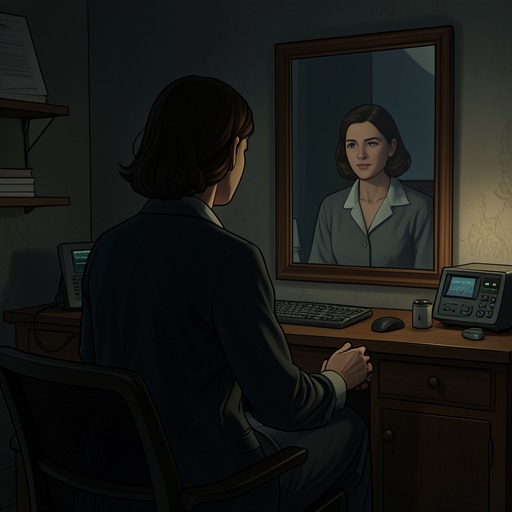
Stefania recalls how Ernest Thorn makes his performances: he sends in fog and catches candlelight in dark mirrors. His acts do not depend on a straightforward lie; they create an illusion. The distinction matters. The spectacle is made from real materials and real effects, but their arrangement encourages spectators to see what they already want to see. The maxim thus describes not only the audience’s credulity but the mechanism by which appearances become persuasive.
A Crisis of Seeing
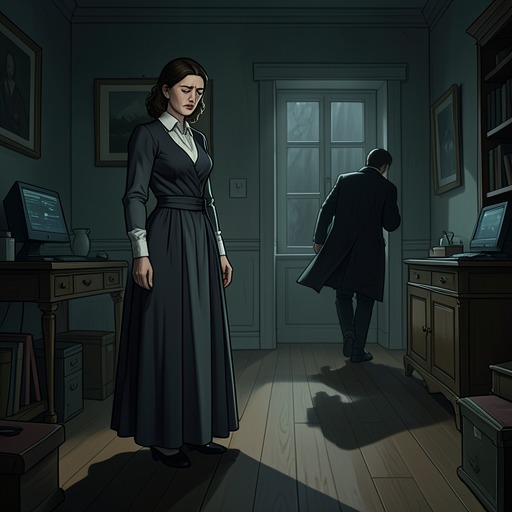
The insight comes amid the destruction of the house. Objects that Petro designed with love melt, collapse, and seem to turn liquid in the flames, while smoke makes it difficult for Stefania to see or breathe. At the same time, her mind feels unusually precise: she sees her life as if it lay in the hollow of her hand. Physical obscurity and mental clarity arrive together, reversing the expectation that clearer sight requires an unobstructed view.
Self-Deception and the Precipice
Stefania recasts her past as somnambulism: she had been walking across a roof without understanding her position, and now stands at its edge, swaying above a bottomless precipice. Nothing, she realizes, has changed in the world around her; what has disappeared is only the thinnest upper layer of air that had concealed the danger. Her image makes illusion less a false object than a protective covering over circumstances that were already perilous.
She then names herself both magician and audience: she has become her own illusionist, misleading herself while also submitting to the hypnosis of a willing public. The formulation complicates the maxim. People may see what they wish to see, but Stefania’s recognition makes the process active as well as passive: she has participated in constructing the vision that kept her from seeing clearly. In the dying house, that recognition arrives not as escape from danger but as an awareness of how long danger was veiled.
From Burned Illusions to Prayer
The adjoining reflection turns the image of smoke toward prayer. Stefania imagines prayer as the smoke of illusions consumed, rising and dispersing into the sky, and says that it no longer requires miraculous icons. This is not a return to the earlier protective appearance of the miraculous; the image instead follows the material logic of the burning house, where what seemed solid disappears into smoke. As her own strength nearly fails, the last thing she can register is Adèle’s faint heartbeat. The maxim’s movement from spectacle to self-deception to prayer ends at this intimate, bodily sign of life.